Creative Direction · 5 min read
The Power of Video: Why Every Brand Needs a Visual Story
Video demonstrates, compresses and humanizes at once. The five kinds worth making, how to shoot once and cut many, and where budgets get wasted.
Covenant Label Designs — Brand Strategy & Creative Studio · Sep 28, 2026
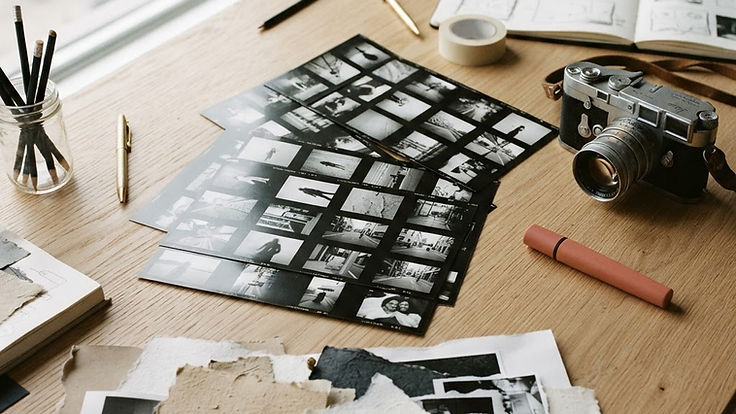
Video has become the default format for attention online, and the businesses that treat it as optional are competing with a handicap. But the argument for video is not "video is popular." It is that video does something no other format can: it demonstrates, compresses, and humanizes simultaneously.
What video does that other formats cannot
It shows rather than claims. A written testimonial says the work was excellent. A two-minute interview with the client saying it — with their face, their hesitation, their specificity — does something entirely different to a buyer's confidence.
It compresses time. A process that takes six weeks can be shown in ninety seconds. For service businesses, this is the single most valuable use of video: making an invisible process visible, which removes the anxiety of hiring someone whose work you cannot see.
It carries tone. Voice, pace, music, and framing communicate confidence, warmth, and competence in ways text struggles to replicate. This is why video is so effective at the top of the funnel, where the question is not "which one" but "do I trust any of this."
It is consumed by default. On most platforms, video autoplays and text is scrolled past. Meeting the audience in the format they already use is not a strategy in itself, but it is a practical requirement.
The five kinds of brand video worth making
Not every business needs all five. Most need two or three, done properly.
1. The brand story film
Two to three minutes establishing who you are, who you serve, and why the business exists. Typically used on the homepage, in proposals, and in sales conversations.
The mistake here is making it about the company. The strongest versions are about the customer's problem and the change the business creates.
2. Customer testimonials
The highest-converting video most businesses can produce, and the one most often done badly. Bad testimonial videos are corporate, scripted, and generic. Good ones are specific: what was the situation, what was the doubt, what happened, what changed.
Ask real questions, film the actual answers, and cut ruthlessly to the specifics. One client saying "they rebuilt our ordering process and our Saturday line moved twice as fast" is worth more than ten saying "great to work with."
3. Product and process demonstrations
For anything physical or technical — apparel decoration, fabrication, food, software — showing the work is the argument. Close-up craft footage builds more credibility than any adjective.
4. Campaign and commercial work
Short-form video for paid social, launches, and seasonal moments. These are judged on stopping power in the first two seconds and a clear single idea.
5. Social-native short form
Vertical, fast, informal. Different rules entirely: hook immediately, keep it under the point where attention breaks, and make it feel made for the platform rather than adapted from a TV spot.
Building a video strategy rather than a video
The common failure is commissioning a single impressive film, using it once, and having nothing afterwards. Video should be planned as a system.
A practical approach: shoot once, cut many.
A single well-planned production day can yield a hero film, three testimonial clips, six short social cuts, a set of stills, and a library of b-roll for future use. The marginal cost of the extra edits is small compared to the cost of another shoot.
Plan the shoot around the deliverables, not the other way around. Write the shot list from the content calendar.
Production quality: where it matters and where it doesn't
Viewers forgive a lot of technical imperfection and almost no incoherence. A phone-shot testimonial with clear audio and a real answer will outperform a beautifully lit video with nothing to say.
Three things are non-negotiable:
- Audio. Bad sound is the fastest way to lose an audience. A modest microphone solves most of it.
- Lighting on faces. Natural window light is usually enough. Faces should be readable.
- A reason to keep watching. The first two seconds must establish why this is worth the next thirty.
Things you can be relaxed about: elaborate sets, cinematic camera moves, expensive color grades. They help, but they do not rescue a weak idea.
Distribution is where most video budgets are wasted
A finished video with no distribution plan is an expense. Before production, decide:
- Where it will live — homepage hero, service page, proposal, email, paid social, in-store screen.
- How it will be cut for each of those places. A three-minute film and a nine-by-sixteen vertical clip are not the same asset.
- Who will see it and how they arrive. Organic social, paid distribution, email list, sales follow-up.
- What it is supposed to do. Book a call, request a quote, increase time on page, reduce sales objections.
Then measure against that. Watch-through rate tells you whether the hook works. Click-through tells you whether the offer works. Inquiry volume tells you whether any of it mattered.
Captions and accessibility
A large share of social video is watched without sound. Captions are not optional, and neither is a transcript for longer pieces — it helps accessibility, and it gives search engines something to index.
A realistic starting point
If you are starting from nothing, do not begin with a brand film. Begin with the asset that shortens your sales cycle: one strong customer testimonial and one demonstration of your process.
Those two pieces will work harder than anything else, because they answer the two questions every buyer has — has this worked for someone like me, and what actually happens if I say yes.
Build the broader library from there. The brands with a real video presence did not start with a budget for everything. They started with one piece that proved the format worked for their business, and expanded it.
Key takeaways
- Video demonstrates, compresses time, and humanizes all at once.
- Start with one strong testimonial and one process demonstration — they shorten the sales cycle.
- Shoot once, cut many: plan production around the deliverables, not a single hero film.