Branding · 4 min read
7 Signs Your Business Has Outgrown Its Branding
Brands rarely break loudly — they drift. Seven signals it's time to rebuild, plus a practical way to audit consistency before you spend anything.
Covenant Label Designs — Brand Strategy & Creative Studio · Oct 18, 2026
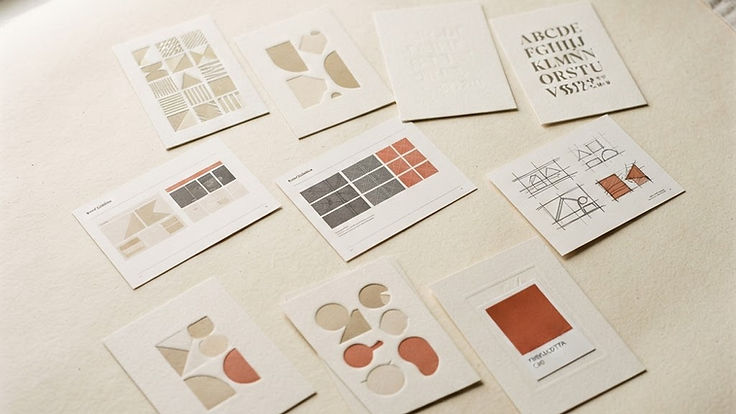
Rebranding is expensive, slow, and occasionally career-defining for the person who champions it — which is why the decision should be made on evidence rather than taste. The tricky part is that the signals are rarely dramatic. A brand rarely breaks loudly. It drifts.
Here are the seven signals we see most often, and how to tell the difference between a brand that needs work and a business that has simply outgrown what its brand was built to hold.
1. You explain the business differently every time
Ask four people in the company what the business does and who it serves. If the answers diverge — one leads with price, one with service, one with a specific product line — the market is receiving four messages and believing none of them.
This is the most common and most fixable signal. It usually needs positioning and messaging work before it needs a new visual identity.
2. Your best work is more sophisticated than your presentation of it
A firm selling six-figure engagements from a website that looks like a 2014 template is not suffering from a design problem. It is suffering from a credibility gap. Buyers price you against the evidence in front of them, and inconsistent or dated presentation quietly caps what you can charge.
3. Your services have outgrown your name or your story
When a company adds divisions, markets, or audiences, the original identity often becomes a constraint. A name that described one product line becomes confusing when there are five. An identity built for retail buyers looks off in enterprise sales rooms. This is the clearest case for a broader rebrand rather than a refresh.
4. The visual system can't survive contact with reality
Check the practical tests: does the logo work in one color? On embroidery? At 16 pixels as a favicon? In a LinkedIn banner crop? Can a new hire produce a decent slide deck without asking a designer?
When every new asset requires a design negotiation, the system does not exist. You have a pile of finished files and no rules.
5. You're being compared to competitors you no longer want to be near
Look at the three businesses customers most often compare you to. If that list embarrasses you, the market has filed you in a category you did not choose. That is a positioning problem with visual consequences — and it will not fix itself through better ads.
6. Reviews and sales calls keep surfacing the same confusion
If prospects consistently ask whether you do something you consider core, or assume you are larger, smaller, cheaper, or more specialized than you are, the brand is miscommunicating at the point of decision. Read your last twenty inquiries for the assumptions baked into the questions.
7. A significant change is already underway
New ownership, a merger, a new flagship location, a pivot in target market, a major hire. These are the moments when a rebrand is cheapest to execute, because attention is already on the change and the story writes itself. Rebranding in a quiet year costs more and explains less.
How to evaluate brand consistency properly
Before deciding anything, do a simple audit. Collect every asset you can find: website pages, social profiles, decks, invoices, signage, uniforms, packaging, email signatures, job postings. Lay them side by side.
Then score them against four questions:
- Does it look like one company? Compare type, color, spacing, photography.
- Does it sound like one company? Compare tone, claims, and vocabulary.
- Does it say the same thing? Compare the core promise across surfaces.
- Does it meet the standard of your best work? Identify your strongest asset and ask whether the rest would pass if held to it.
The pattern that emerges tells you the scope. If visual consistency is the only failure, you need a design system refresh. If the message is incoherent across everything, you need strategy first.
What a rebrand is not
A rebrand is not a new logo on the same website, the same messaging, and the same customer experience. That is a cosmetic update, and it usually produces the strange outcome where the company feels newer but no more credible.
Nor is a rebrand automatically the right answer. Frequently the audit reveals that the identity is sound and the real gap is in how the business talks about itself, or in the customer experience after the sale. Recommending a full rebrand in that situation is an expensive way to avoid a harder conversation.
A reasonable sequence
Start with an audit and an honest positioning review. Decide whether the business needs clarity, consistency, or a genuinely new identity — those are three different projects with three different price points.
Then execute in order: strategy, messaging, identity system, and roll-out across the highest-traffic touchpoints first. Leave the low-visibility assets for later. Nobody has ever lost a deal because the letterhead was updated in phase two.
The point of rebranding is not to look different. It is to make the outside of the business match the ambition of the inside.
Key takeaways
- Brands drift rather than break — the signals are usually behavioral, not dramatic.
- Audit consistency across look, sound, message, and standard before deciding on scope.
- Rebrand when the identity actively costs you; refresh when the problem is messaging or experience.